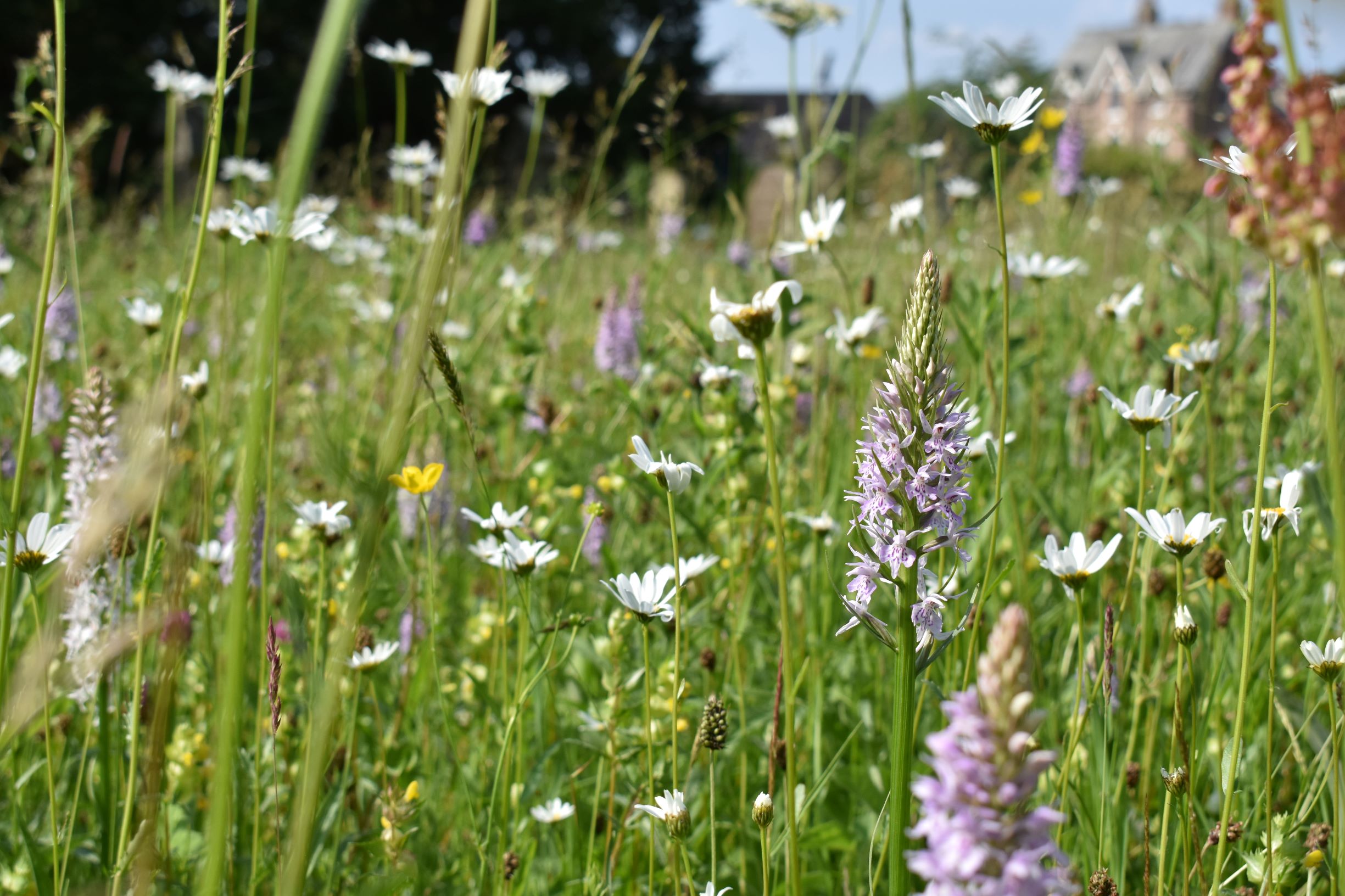
We are compiling this directory of flowery burial grounds from across the UK, which we would recommend visiting if you are looking for a well managed site rich in wildlife and heritage. Burial grounds can have a rich array of plants, animals and fungi, and may contain the only surviving area of flower-rich grassland in a parish. All the sites listed here contain this habitat. To see the flowers at their best, late May to mid or end of July is usually the most suitable time to visit. However, do contact the site managers for more specific timings before you visit if this is important to you.
Opening in 1836, as the Birmingham General Cemetery, this is Birmingham's oldest cemetery. It was founded by a group of nonconformist businessmen to provide unconsecrated burial space for 'all creeds and denominations'. Now at the heart of Birmingham, this site is famous for the people who are interred there including Joseph Chamberlain (Mayor, MP and father of Neville), Harriet Martineau (author and sociologist), George Dawson (preacher of the Civic Gospel), Constance Naden (poet, scientist, philosopher, artist) and 3 of JRR Tolkien's grandparents. The cemetery is also renowned as an urban wildlife haven, especially in the Spring when it transforms into a carpet of bluebells. The cemetery is home to lots of wildlife including foxes, bats, birds and insects. The majority of the mature trees are London Planes, but there are also nature species including Silver Birch and Linden trees in the cemetery. The grass is left long in the Spring and Summer for the bluebells and wildflowers to bloom. The cemetery is very peaceful - although you might hear announcements from the neighbouring train/tram station occasionally.
The cemetery contains a screen wall War Memorial and CWGC war graves and there are 2 war memorial benches on top of the catacombs, a spot which also provides excellent views out across the cemetery, there are also benches at the island where the chapel once stood (demolished in the latter part of the 20th century due to poor condition of the soft sandstone). There are 6 interpretation panels in the cemetery with information about the cemetery history, wildlife and burials.
- Famous/infamous people's memorials
- Fascinating monuments
- Good accessibility
- Interpretation boards
- Peaceful space for quiet reflection
- Stones with stories
- War memorial
- Wild flower Areas in spring/summer
- Wildlife haven
There is level access to much of the cemetery as the paths were resurfaced in 2021 including at both entrances, but the hilly nature of the site means that some paths have steep gradients. There are benches with arm rests at the chapel island and above the catacombs, and other benches without armrests throughout the cemetery.
The cemetery is approximately a 10 minute walk from the Jewellery Quarter station for trains and trams, and the number 8C/8A bus stops outside the station. Turn left out of the station onto Vyse Street, turn left onto Hylton street, follow the road around until you find the alleyway marked 'Key Hill Drive and Key Hill Cemetery' and cut through to Key Hill Drive. Walk down Key Hill Drive and turn left onto Key Hill, the cemetery is on your left.
The map below will take a few seconds to load. You can search for a burial ground either by county, or by the name of the burial ground, or by clicking the markers on the map.