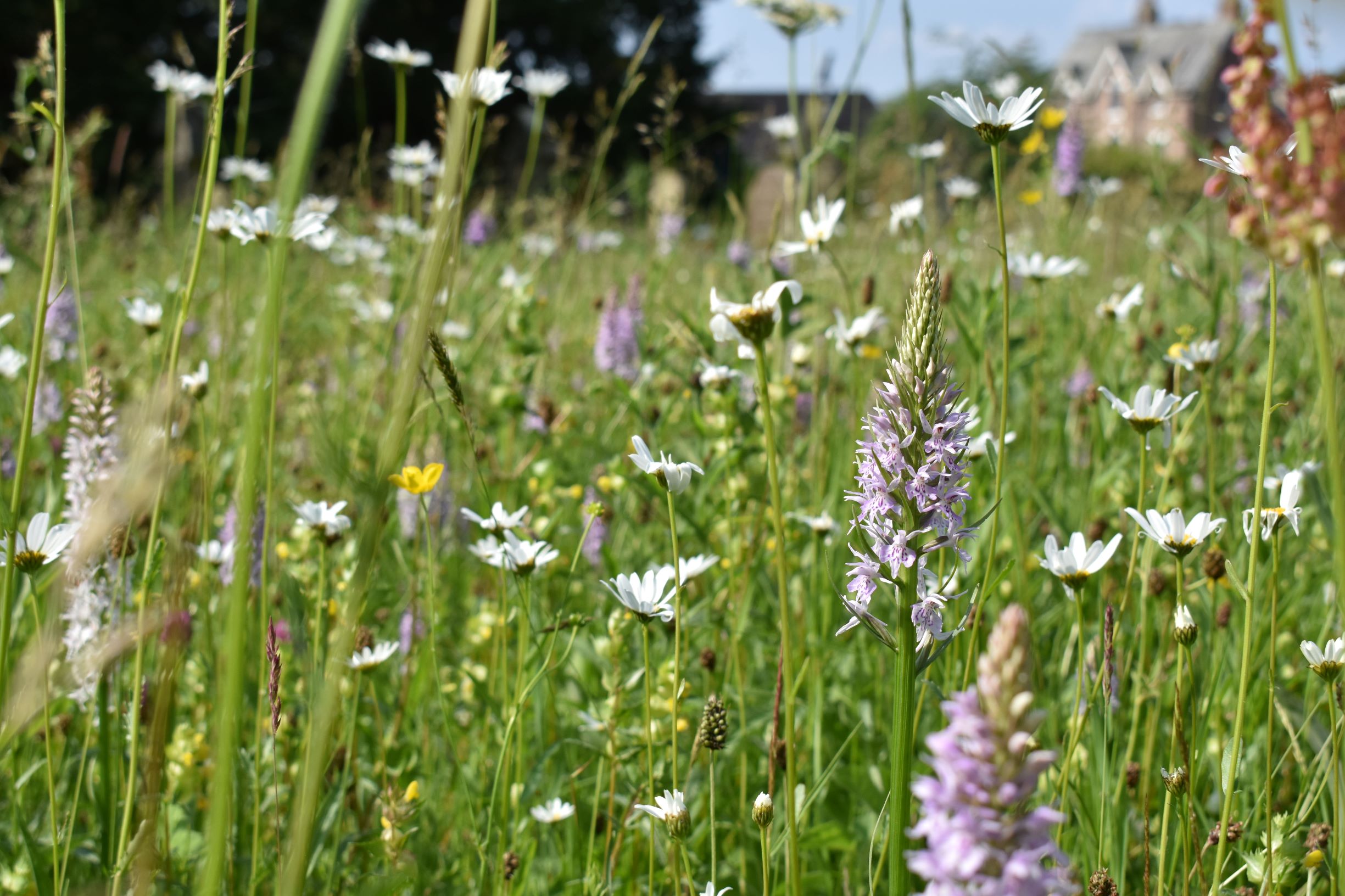
We are compiling this directory of flowery burial grounds from across the UK, which we would recommend visiting if you are looking for a well managed site rich in wildlife and heritage. Burial grounds can have a rich array of plants, animals and fungi, and may contain the only surviving area of flower-rich grassland in a parish. All the sites listed here contain this habitat. To see the flowers at their best, late May to mid or end of July is usually the most suitable time to visit. However, do contact the site managers for more specific timings before you visit if this is important to you.
All Saints Church is best known for the very old yew tree growing from the top of the tower, but the church is also appreciated for its excellent acoustics and professional musicians from as far afield as the US, Japan and the Netherlands perform here fairly frequently as guests of the Blackdown Early Music Project. The churchyard has been managed (with the assistance of the very patient Mid Devon Council grounds team) by volunteers. Our aim is to create a welcoming and peaceful space for residents and wildlife alike. There has been a noticeable increase in wildflowers appearing and to speed up the process, several native plants and other pollinators have been introduced. Swift boxes have been installed in the tower and local school children visit every three weeks to participate in our work or to hear from locals with relevant experience and knowledge. Although in only the third year of the project, we are pleased that All Saints churchyard is an attractive haven for its resident wildlife and for those of us who pass through or visit to find peace. It is also a place for play and discovery, with a mown labyrinth and maze and provides a photogenic background for wedding photography. A collection of mostly Mediterranean plants is gradually being introduced as part of a Bible trail. Visitors may like to make use of the four benches to enjoy the views across the churchyard or the valley, towards the Culmstock beacon.
- Birders paradise
- Good accessibility
- Great for fungi
- Lichen haven
- Peaceful space for quiet reflection
- Wild flower Areas in spring/summer
- Wildlife haven
The churchyard slopes and is uneven in places, but paths are mown so that it possible to look out for hollows or curb stones. It is suggested that one keeps to these as there are likely to be unexpected hollows where the grass has been left to grow long. All-terrain wheelchairs would be required to explore the wider area, but there is a good Tarmac path from The Cleeve to the church itself, where, with notice, the west doors can be opened for easy entry. Please contact https://www.culmkirks.co.uk/contact-us. Someone will definitely be delighted to make your visit as comfortable as possible.
No. 20 buses from Honiton and Wellington stop just outside on Fore Street several times per day. Transport by car is preferable. Tiverton Parkway is approximately 15 mins by car. Nearby major roads are the M5, A38 and A303.
The map below will take a few seconds to load. You can search for a burial ground either by county, or by the name of the burial ground, or by clicking the markers on the map.