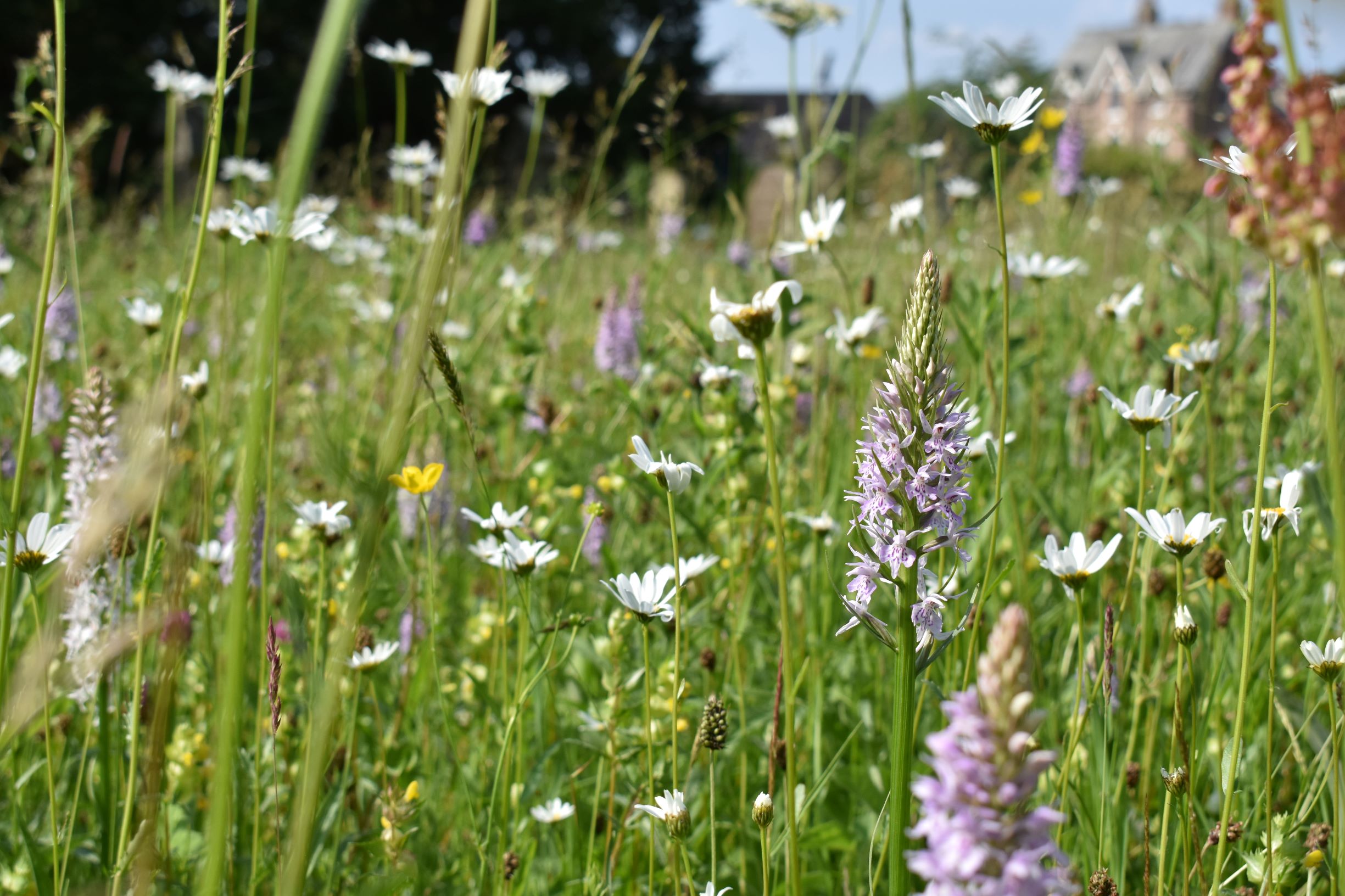
We are compiling this directory of flowery burial grounds from across the UK, which we would recommend visiting if you are looking for a well managed site rich in wildlife and heritage. Burial grounds can have a rich array of plants, animals and fungi, and may contain the only surviving area of flower-rich grassland in a parish. All the sites listed here contain this habitat. To see the flowers at their best, late May to mid or end of July is usually the most suitable time to visit. However, do contact the site managers for more specific timings before you visit if this is important to you.
At St James we are managing our churchyard with wildlife conservation very much in mind. We began the process in a small way in the spring of 2013, inviting the local community to join us in building and placing bird boxes, more than half of which became home to families of blue tits and great tits over that summer. The Churchyard Conservation Project was officially launched in Spring 2014 when we began to recreate the right conditions for wild meadow to develop, allowing selected areas to grow uncut during spring and early summer. The project is now well established, transforming the selected areas into wildflower meadow, creating a habitat for bees and butterflies and other small creatures, contrasting with the short grass in other parts of the churchyard and mown paths among the flowers and graves.
The only plant we have introduced into the churchyard is yellow rattle, a semi parasitic plant which we use as a management tool to control the vigorous grasses. We made the decision not to introduce any other plants, preferring instead to wait and see what might grow from what was already there, dormant in the seed bed. Although it has taken time, we now have a wide variety of wild flowers growing naturally, and our species count to date comes to 107 wild flowers and 136 animals and birds formally identified and recorded. These include meadow saxifrage, field scabious, a pyramidal orchid that popped up in 2020 and again in 2022 and the lesser horseshoe bats that use the old boiler house underneath the church as a transitory roost at certain times of year.
We hold regular churchyard events and open days including species counts and children’s bug hunts and we have two local primary schools who have started to use the churchyard for educational visits. Our Sunday School children have a “Muddy Church” area under the yew trees behind the compost heap which they use as a base for churchyard exploration and learning about God’s Creation when the weather is dry.
We depend on a loyal army of core volunteers to maintain the churchyard and wildflower meadow and welcome visitors from the local community and beyond to our three working parties each year. These are held in March, November and late July/early August when we hold our summer mow and celebrate with a barbecue.
The churchyard grows and develops from April through to the summer and is constantly changing. It is usually at its best in May and June when our sea of splendid oxeye daisies can be admired, along with the butterflies and other invertebrates that they attract.
- Fascinating monuments
- Good accessibility
- Peaceful space for quiet reflection
- Stones with stories
- Wild flower Areas in spring/summer
- Wildlife haven
There are tarmac paths around the church and mown, grass paths through the wildflower areas.
There is a bus stop a 3 min walk away at the end of Church Lane on the main road by the youth hostel. It is served by routes 15, 77, 77b for more information please visit stagecoachbus.com
The map below will take a few seconds to load. You can search for a burial ground either by county, or by the name of the burial ground, or by clicking the markers on the map.