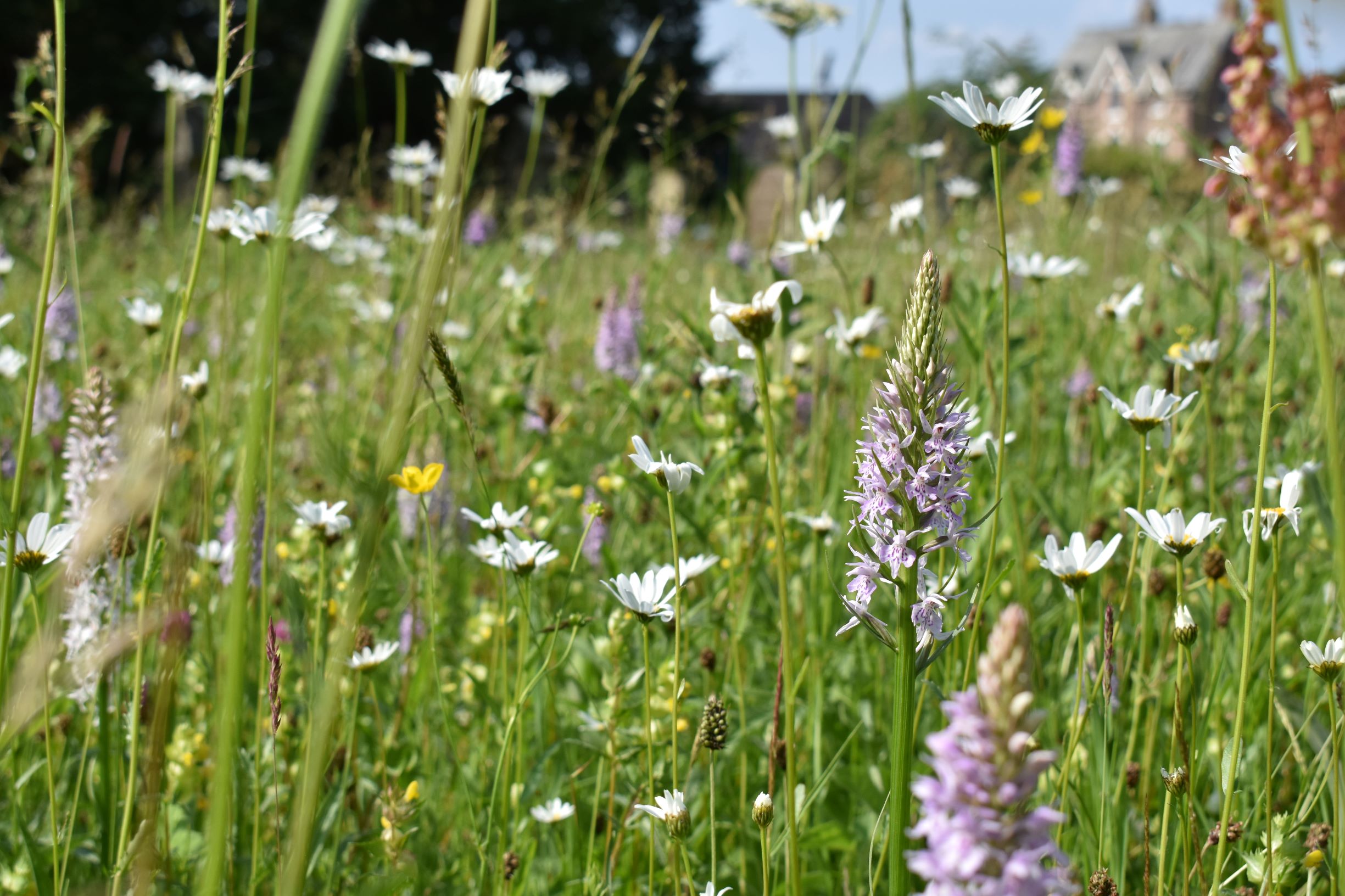
We are compiling this directory of flowery burial grounds from across the UK, which we would recommend visiting if you are looking for a well managed site rich in wildlife and heritage. Burial grounds can have a rich array of plants, animals and fungi, and may contain the only surviving area of flower-rich grassland in a parish. All the sites listed here contain this habitat. To see the flowers at their best, late May to mid or end of July is usually the most suitable time to visit. However, do contact the site managers for more specific timings before you visit if this is important to you.
The Churchyard at Whitton is managed by a small team of volunteers. There are recorded some 200 different plant species including a spring a carpet of wild daffodils. 78 species of lichen have also been recorded in the churchyard.
The northerly meadow is a mass of wild daffodils in the spring, and is cut in late July for hay, and then regularly to maintain a tidy appearance.
The southerly meadows are cut from early July onwards and a small section close to the north wall of the church is cut in late August as it is the habitat of betony, devils bit scabious, barren strawberry, bitter vetch and bird’s foot trefoil.
The excellent flora reflects the sympathetic management which the churchyard receives. Although the grassland has a good deal of Yorkshire fog and frequent false oat-grass, it does contain many indicators of old unimproved grassland. These include crested dog’s-tail, yellow oat-grass, sweet vernal-grass, ladies bedstraw, sorrel, common knapweed and pignut.
- Birders paradise
- Fascinating monuments
- Great for fungi
- Lichen haven
- Peaceful space for quiet reflection
- Stones with stories
- Wild flower Areas in spring/summer
- Wildlife haven
The main access is via a set of steps from a sunken lane. There is a second access to the Church via a grass and rubble driveway to the north
The map below will take a few seconds to load. You can search for a burial ground either by county, or by the name of the burial ground, or by clicking the markers on the map.