Prosiect Llecynnau Pwysig i Fioamrywiaeth ledled Cymru
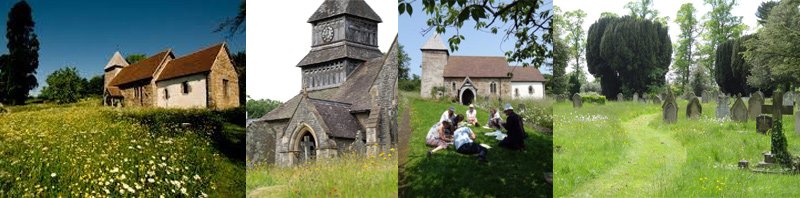
Biodiversity Hotspots Across Wales (Mid & North East Wales) was a project funded by Natural Resources Wales across the Welsh counties of Wrexham, Flintshire, Denbighshire, Ceredigion and Powys with the aim of supporting burial ground managers to increase biodiversity within their site. The project was funded from October 2020 until March 2023 and outputs included:
-
- 80 volunteer champions were identified and supported
- 51 grassland surveys of burial grounds were undertaken
- 15 training workshops were delivered
- 90 base maps of burial grounds were disseminated
- 94 Biodiversity Management Briefs were developed
- 22 Best practice sites were identified
- 4 mini films were produced
- 22 native seed doner sites were identified
- 7 Case Studies completed
A churchyard or burial site may be the most ancient enclosed piece of land in a parish, town or city. The grassland will have been relatively undisturbed, re-seeding naturally for hundreds if not thousands of years. It will also have been both mown for hay and grazed by animals during its time as a burial ground. A benefit of this continuity of management over a very long time is a rich diversity of grasses, flowers and animals.
This old, relatively undisturbed or ‘unimproved’ grassland is now rare in the UK. Since the 1940s over 97% of flower-rich grassland, that was once widespread in the countryside, has vanished. The ancient grassland found in old burial grounds is a relic of that once common habitat and these sites have become the Noah’s Ark for many species.
The Issues
There are hundreds of burial grounds in the areas this project covers. Each is nestled in the heart of communities – both emotionally and geographically. Although sites are diverse – ranging from small rural church and chapel yards to large urban cemeteries, they have important ecological features in common:
- Nearly all contain species rich semi-natural grassland;
- For most areas this fragment is the only remnant of semi-natural grassland found within the locality;
- They provide refuge for many species but many sites are suffering from under management and the loss of biodiversity is taking place;
- Most sites have ancient and veteran yews that need care;
- Invasive non-native species, such as Japanese knotweed, are an increasing issue.
Whilst Biodiversity Hotspots Across Wales has now finished as a project, we still may be able to offer advice or guidance on how to increase the biodiversity of your burial ground – contact enquiries@cfga.org.uk
Prosiect Llecynnau Pwysig i Fioamrywiaeth ledled Cymru
Roedd Llecynnau Pwysig i Fioamrywiaeth Ledled Cymru (Canolbarth a Gogledd Ddwyrain Cymru) yn brosiect a gyllidwyd gan Gyfoeth Naturiol Cymru ar draws siroedd Wrecsam, y Fflint, Sir Ddinbych, Ceredigion a Phowys gyda’r nod o gefnogi rheolwyr safleoedd claddu i gynyddu bioamrywiaeth o fewn eu safle. Cyllidwyd y prosiect rhwng mis Hydref 2020 a mis Mawrth 2023 ac roedd yr allbynnau’n cynnwys y canlynol:
-
- 80 o hyrwyddwyr gwirfoddol wedi’u nodi a’u cefnogi
- 51 o arolygon glaswelltir mewn safleoedd claddu wedi’u cynnal
- 15 o weithdai hyfforddi wedi’u cyflwyno
- 90 o fapiau sylfaen o safleoedd claddu wedi’u dosbarthu
- 94 o Friffiau Rheoli Amrywiaeth wedi’u datblygu
- 22 o safleoedd Arfer Gorau wedi’u nodi
- 4 o ffilmiau byrion wedi’u cynhyrchu
- 22 o safleoedd cyfrannu hadau brodorol wedi’u nodi
- 7 o Astudiaethau Achos wedi’u cwblhau
YCHYDIG O GEFNDIR
Mae’n bosibl mai mynwent neu safle claddu yw’r darn mwyaf hynafol o dir caeedig mewn plwyf, tref neu ddinas. Bydd y glaswelltir wedi cael ei adael heb i neb darfu arno fwy neu lai, gan ailhadu’n naturiol am gannoedd os nad miloedd o flynyddoedd. Bydd hefyd wedi cael ei dorri ar gyfer gwair a’i bori gan anifeiliaid yn ystod ei gyfnod fel safle claddu. Un o fanteision y cysondeb hwn mewn rheolaeth dros gyfnod hir iawn yw amrywiaeth gyfoethog o laswelltau, blodau ac anifeiliaid.
Mae’r hen laswelltir hwn, heb i neb darfu llawer arno neu ‘heb ei wella’, yn brin yn y DU bellach. Ers y 1940au mae mwy na 97% o laswelltir llawn blodau, a oedd yn gyffredin unwaith yng nghefn gwlad, wedi diflannu. Mae’r glaswelltir hynafol sydd mewn hen safleoedd claddu yn grair o’r cynefin a fu unwaith yn gyffredin ac mae’r safleoedd hyn wedi dod yn Arch Noa i lawer o rywogaethau.
Y MATERION
Er bod Llecynnau Pwysig i Fioamrywiaeth Ledled Cymru wedi dod i ben bellach fel prosiect, efallai y byddwn yn gallu cynnig cyngor neu arweiniad ar sut i gynyddu bioamrywiaeth eich safle claddu o hyd – cysylltwch â enquiries@cfga.org.uk